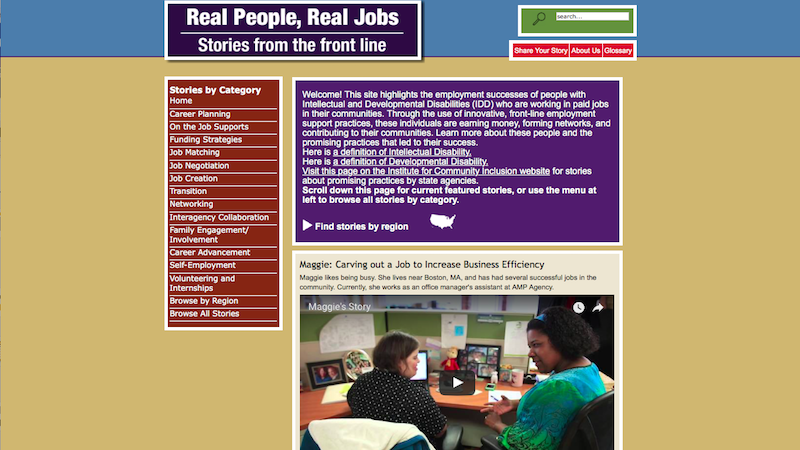
“This site highlights the employment successes of people with Intellectual and Developmental Disabilities (IDD) who are working in paid jobs in their communities. Through the use of innovative, front-line employment support practices, these individuals are earning money, forming networks, and contributing to their communities. Learn more about these people and the promising practices that led to their success.”
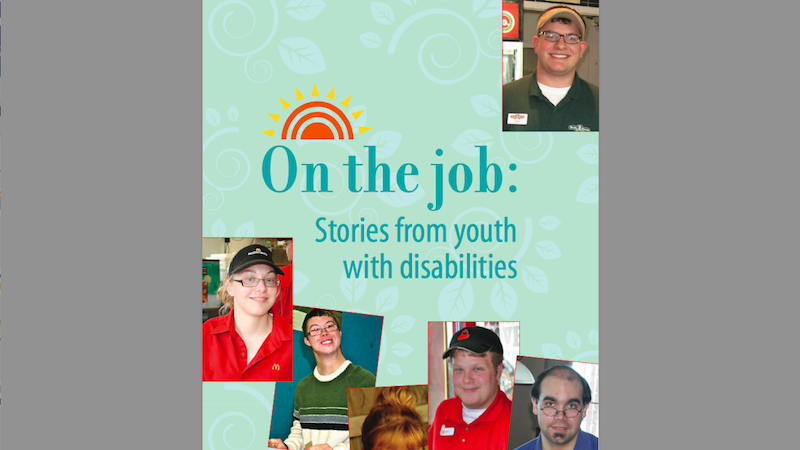
This booklet by the Keene State College site of the Monadnock Center for Successful Transitions (MCST) describes how to build partnerships for career exploration using job shadows to explore the world of work.
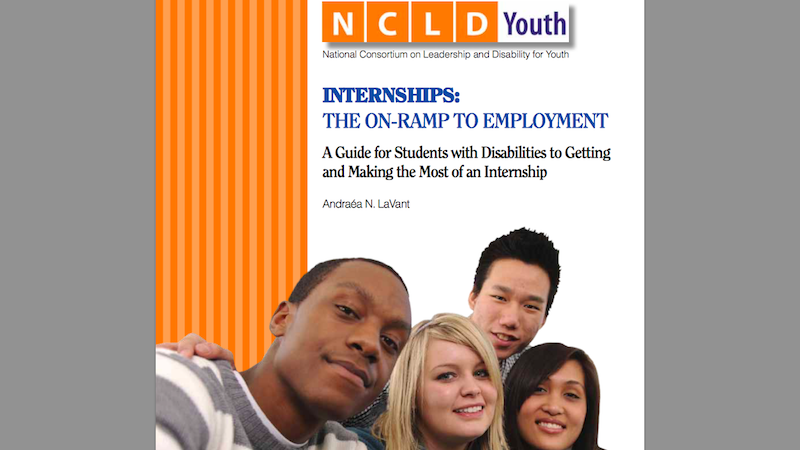
This booklet by The National Consortium on Leadership and Disability/Youth (NCLD-Youth) is a guide for students with disabilities to getting and making the most of an internship.
Transition is the “exit” out of a child’s secondary school to the adult world. The Individuals with Disabilities Education Act (IDEA) requires that children with disabilities have access to a free appropriate public education (FAPE) that prepares them for further education, employment, and independent living. One strategy for ensuring a successful transition, is planning. As part of IDEA, schools are required to provide transition planning to help the student identify interests, strengths, preferences and needs. Transition planning also means identifying possible post-school activities, including postsecondary education, vocational education, integrated employment, continuing and adult education, adult services, independent living, and/or community participation. Transition is also developing a coordinated set of activities for a student that will help him or her to achieve those goals.
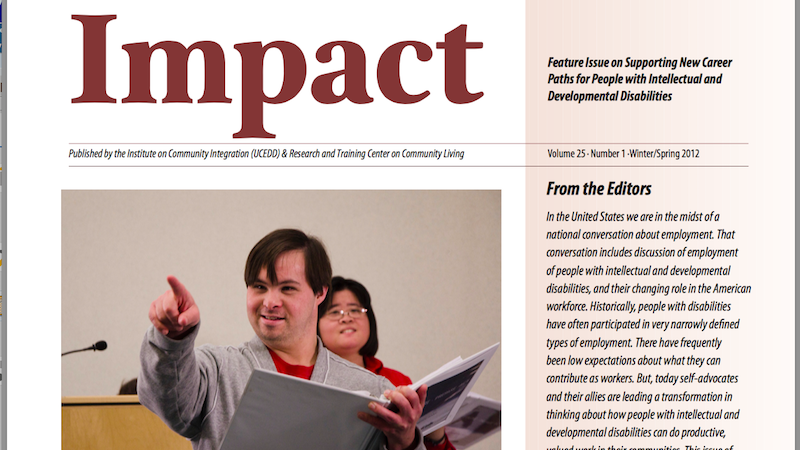
Newsletter from the Institute on Community Integration (UCEDD) & Research and Training Center on Community Living about “Supporting New Career Paths for People with Intellectual and Developmental Disabilities.”
Many resources for youth with disabilities about getting work. They also share ways for youth to become a leaders in helping people with disabilities get work. They can also help students in high school who want to work with computers.
The guide helps those assisting youth with disabilities navigate the range of state and federal government programs and benefits for people with disabilities in the United States.
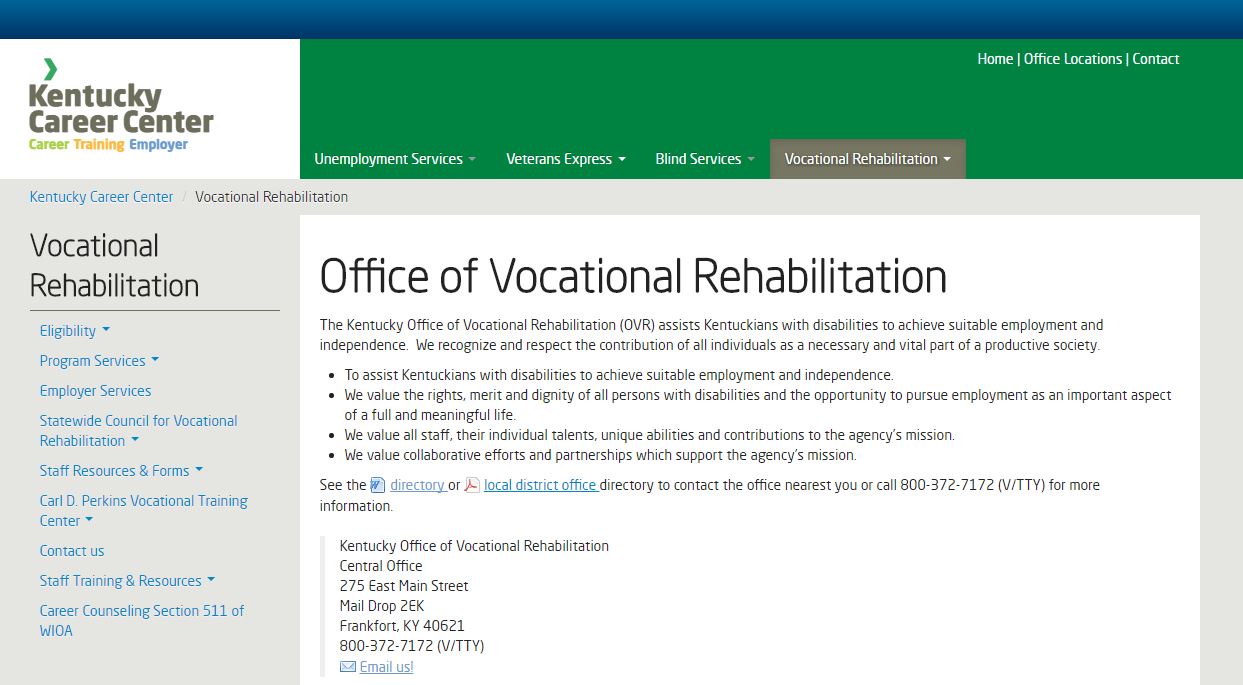
State program that gives funding, job coaches, and support to people with disabilities so they can work.
Phone: (502) 564-4440 or (800) 372-7172
KentuckyWorks is a collaborative effort between the Human Development Institute, the Kentucky Office of Vocational Rehabilitation (OVR), the Kentucky Department of Education , the Kentucky Division of Developmental and Intellectual Disabilities, KY Department for Aging and Independent Living (DAIL), Kentucky Protection & Advocacy, KY Community and Technical College System, the Kentucky Governor’s Office of Early Childhood (GOEC), Commonwealth Council on Developmental Disabilities, the Kentucky Office of Autism, and the Kentucky Autism Training Center.