Author(s): U.S. Department of Labor, Office of Disability Employment Policy
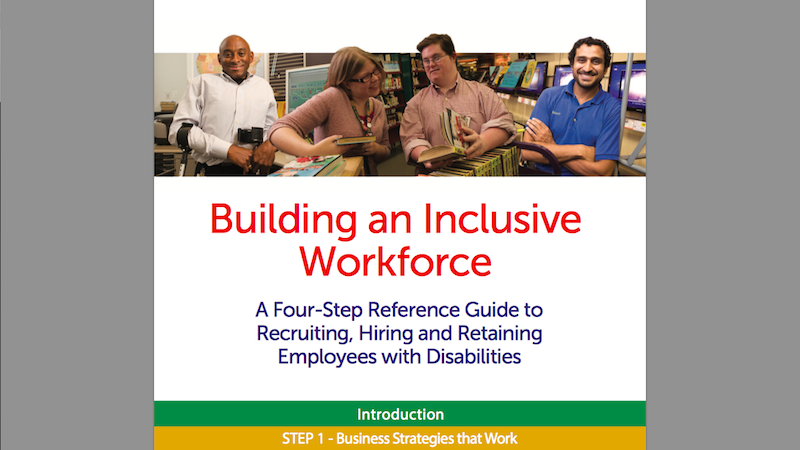
This guide helps employers recruit, hire, and retain employees with disabilities and includes examples of inclusive workplaces and links to different resources. Free
Author(s): U.S. Department of Labor, Office of Disability Employment Policy
This guide helps employers recruit, hire, and retain employees with disabilities and includes examples of inclusive workplaces and links to different resources. Free
US EEOC: Americans with Disabilities Act Questions and Answers [link]
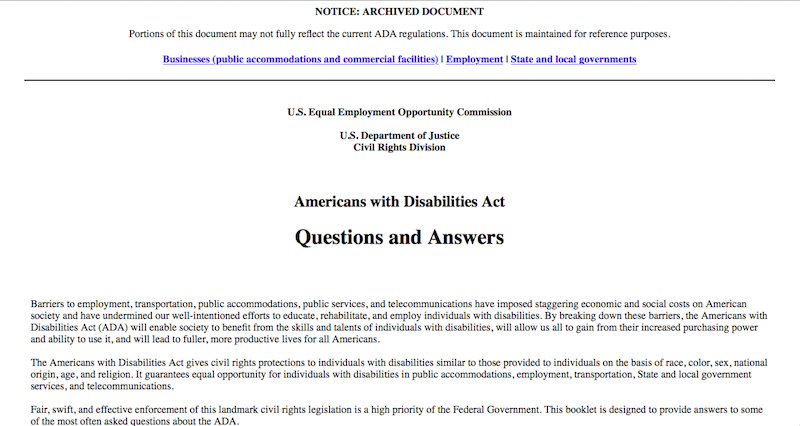
“The Americans with Disabilities Act gives civil rights protections to individuals with disabilities similar to those provided to individuals on the basis of race, color, sex, national origin, age, and religion. It guarantees equal opportunity for individuals with disabilities in public accommodations, employment, transportation, State and local government services, and telecommunications.
Fair, swift, and effective enforcement of this landmark civil rights legislation is a high priority of the Federal Government. This booklet is designed to provide answers to some of the most often asked questions about the ADA.”
US Department of Labor—Employers and the ADA: Myths and Facts [link]
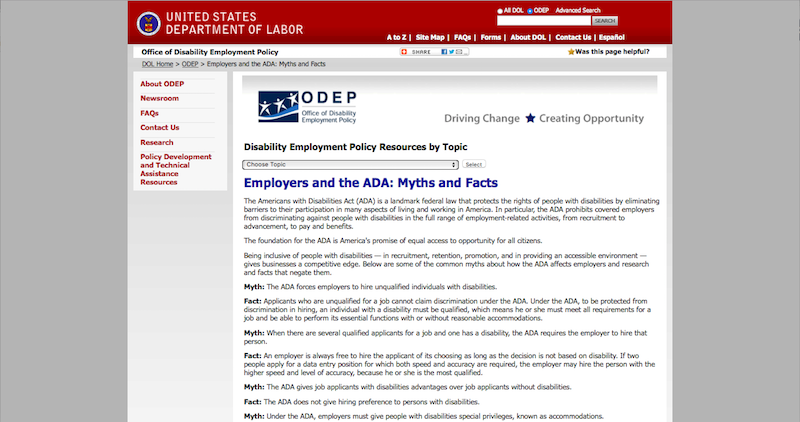
“Being inclusive of people with disabilities — in recruitment, retention, promotion, and in providing an accessible environment — gives businesses a competitive edge. Below are some of the common myths about how the ADA affects employers and research and facts that negate them.”
Kentucky Employment Files Video Series [link]
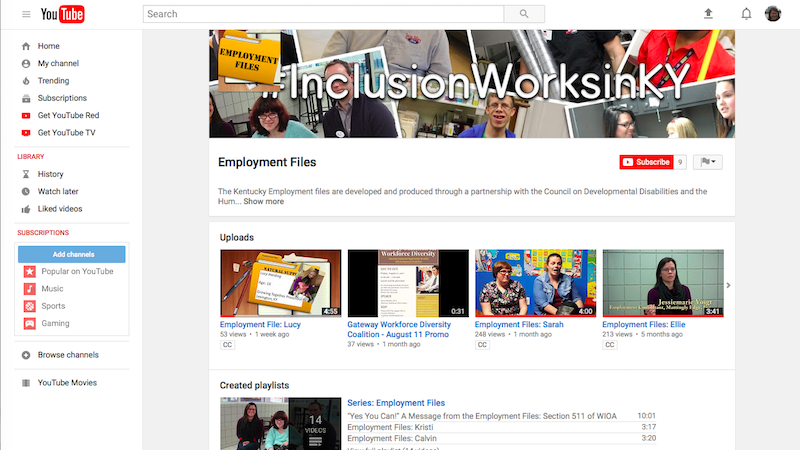
The Kentucky Employment files are developed and produced through a partnership with the Council on Developmental Disabilities and the Human Development Institute, University of Kentucky.

Coalition For Workforce Diversity [link]
Kentucky recruiting and networking resource for people with disabilities.
Contact: Willie Byrd at (502)955-7271 or williebyrd@gmail.com
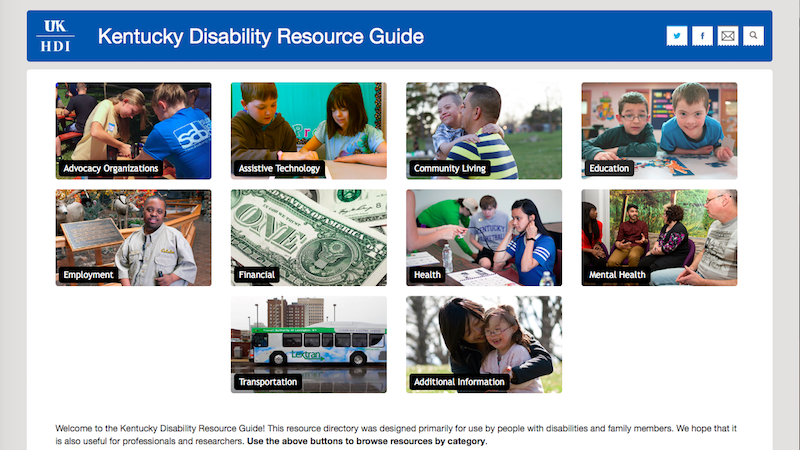
Kentucky Disability Resource Guide [link]
The focus of this directory is to provide a searchable database of available resources, and to provide contact information to apply for resources and/or locate additional information. In many cases, we took definitions and eligibility for services directly from the agency websites that offer these programs.
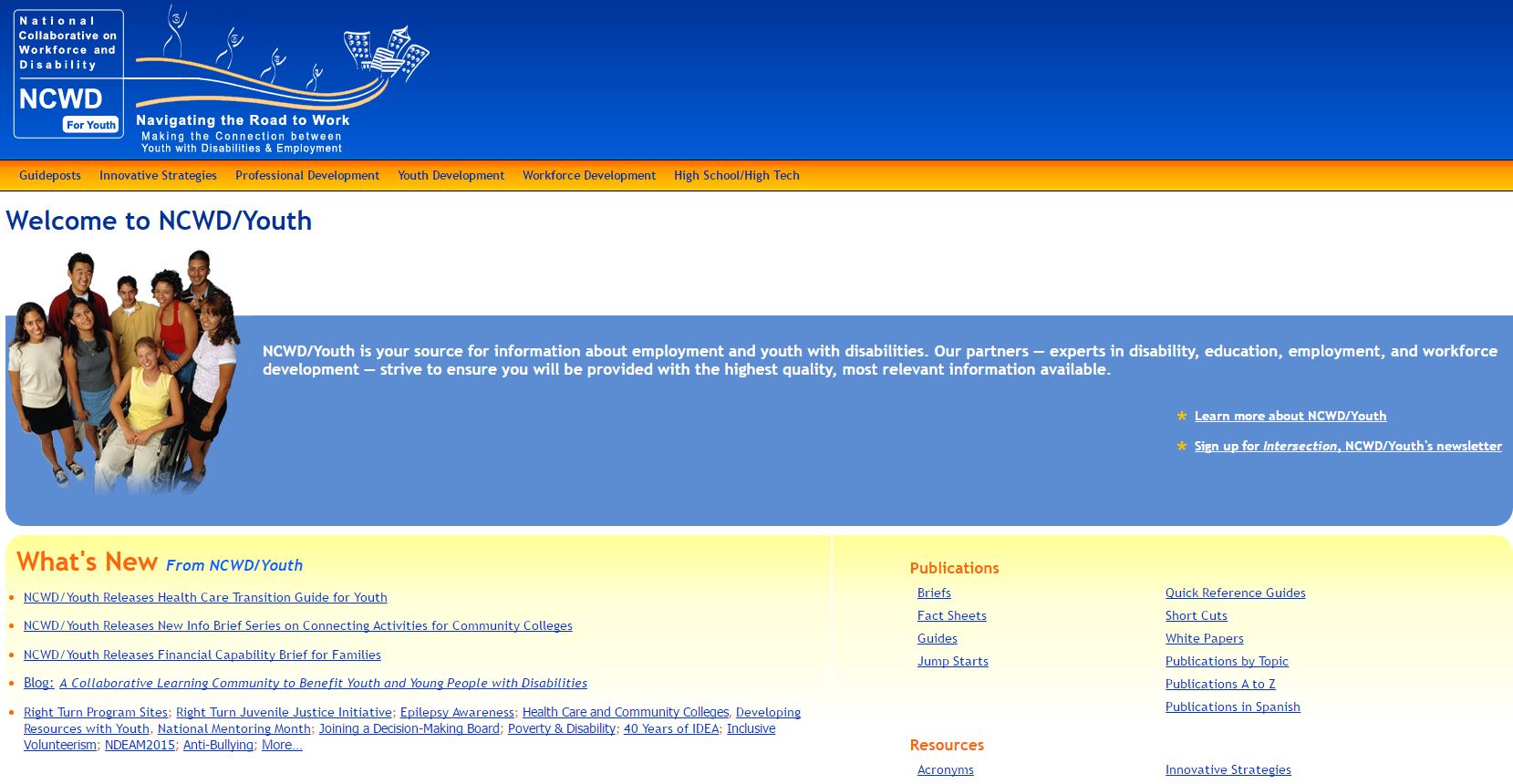
National Collaborative on Workforce and Disability [link]
Many resources for youth with disabilities about getting work. They also share ways for youth to become a leaders in helping people with disabilities get work. They can also help students in high school who want to work with computers.
Phone: 877-871-0744
This InfoBrief explores the important role families play in the job search and retention for youth with disabilities.
Benefits Planning for Youths with Disabilities [link]
The guide helps those assisting youth with disabilities navigate the range of state and federal government programs and benefits for people with disabilities in the United States.
Understanding the New Vision for Career Development: The Role of Family [link]
Introduces families to a new way of looking at career development for youth.
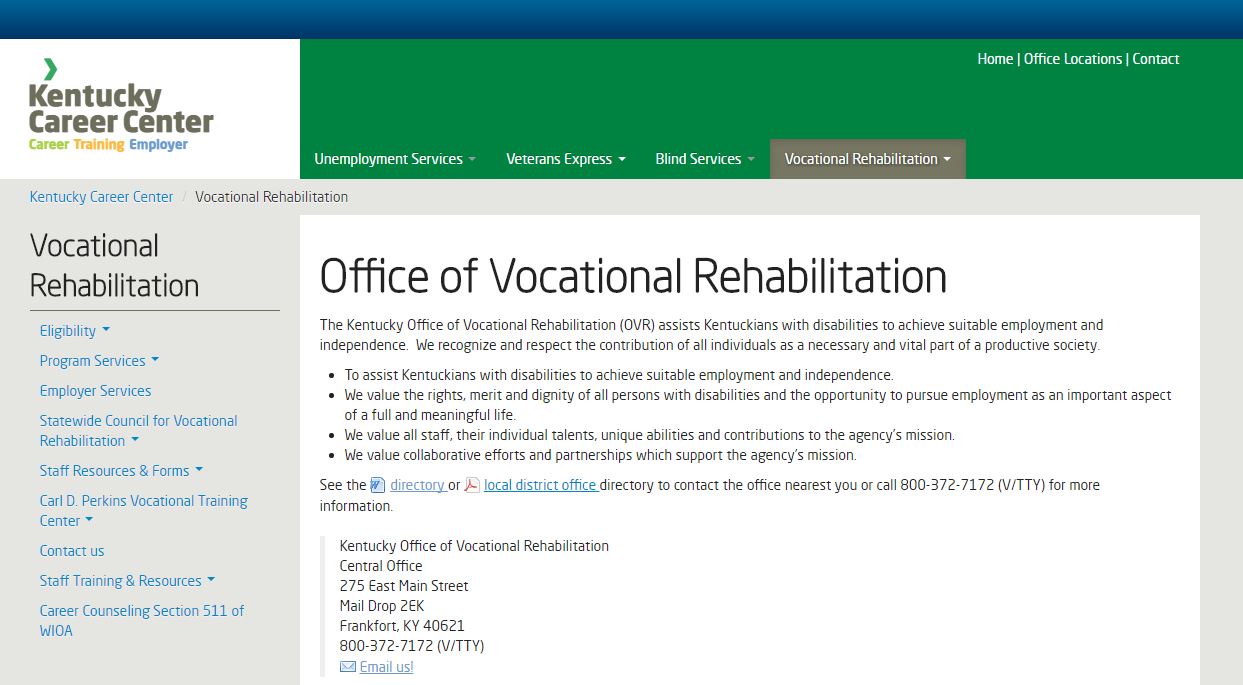
Kentucky Office of Vocational Rehabilitation [link]
State program that gives funding, job coaches, and support to people with disabilities so they can work.
Phone: (502) 564-4440 or (800) 372-7172
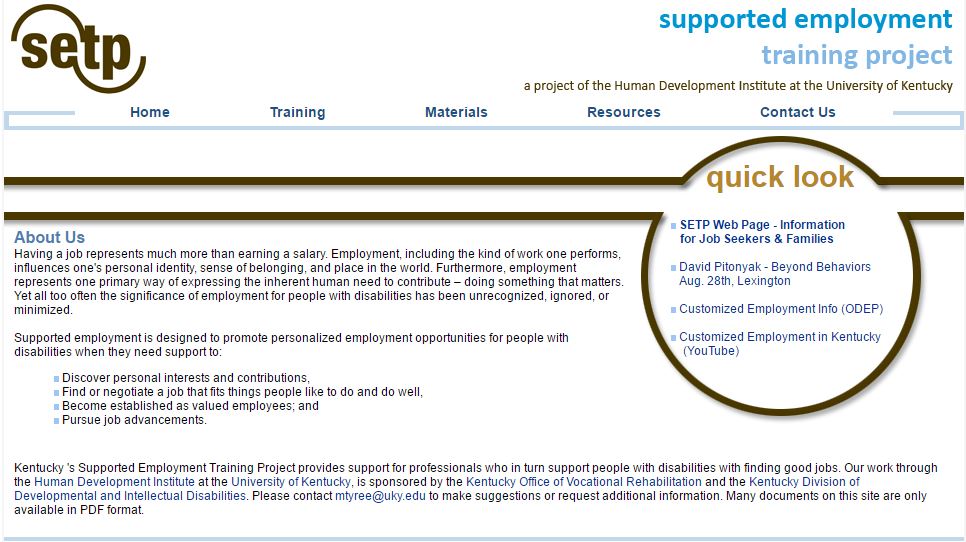
Kentucky Supported Employment Training Project [link]
Program that helps people with disabilities find jobs that they like to do and do well.
For general supported employment questions or for ideas to improve this web page:
Katie Wolf Whaley, cell 859-218-5960, mtyree@uky.edu
Person to contact when not getting what’s needed regarding supported employment:
Teresa Brandenburg, OVR Supported Employment Program, office 502-564-4440 or 1-800-372-7172.
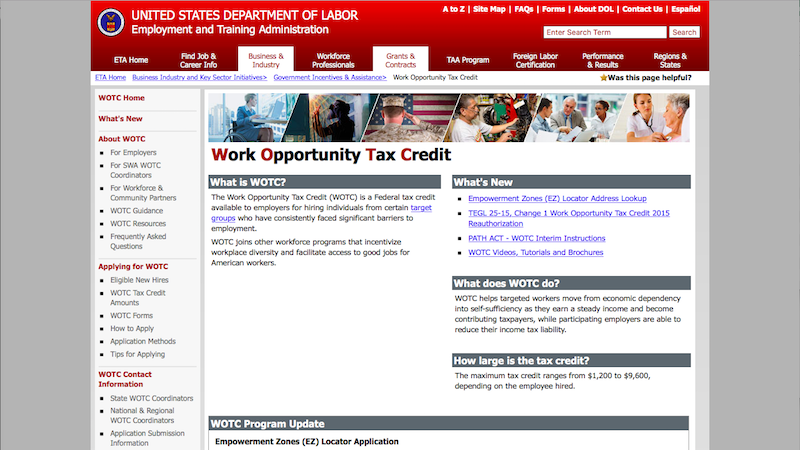
Work Opportunity Tax Credit (WOTC) website [link]
Author(s):US Department of Labor
The Work Opportunity Tax Credit (WOTC) Program is designed to assist individuals from certain targeted groups who have consistently faced significant employment barriers with re/entering the labor force. The program does so by providing federal tax credit incentives to employers for hiring these individuals. WOTC helps targeted workers move from economic dependency into self-sufficiency as they earn a steady income and become contributing taxpayers, while participating employers simultaneously reduce their income tax liability.This website describes the WOTC and provides information about how employers can apply for the tax credit. Download the 2012 research study by the American Society of Safety Engineers sharing performance