
(From TennesseeWorks)
What are Work Incentives?
Many work incentives exist that encourage young people with intellectual and developmental disabilities (IDD) to pursue competitive employment. For example, the Social Security Administration (SSA) builds incentives into its public benefits programs for individuals with disabilities. Unfortunately, many young people with disabilities and their family members do not have all the information they need related to the impact that working has on benefits, particularly Supplemental Security Income (SSI) and Medicaid, the public health insurance SSI recipients are enrolled in. Though the SSI cash benefits are designed to decrease as income increases, multiple work incentives are built into the program to encourage competitive employment.
The federal government also provides assistance (usually in the form of tax breaks) to employers who hire people with disabilities. It makes good business sense to hire young people with IDD. For example, the Work Opportunity Tax Credit (WOTC) can provide employers with a tax credit of up to 40 percent of the first $6,000 of first-year wages of a new employee.
Why Are Work Incentives Important?
Having a clear understanding of the impact working has on benefits is important. Too often, a fear of losing benefits can prevent young people and their families from pursuing opportunities that might lead to meaningful employment. Key facts to consider include:
- Young people will usually make more money working than not working and receiving SSI benefits
- There are work incentives that help young people receiving SSI work while retaining benefits and pay for necessary items/services
- Young people might be able to keep Medicaid until they earn approximately $37,000
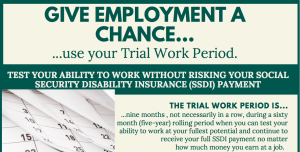
Trial Work Period Infographic

Benefits 101: A Guided Study of Your Own Situation

What You Need to Know About Your SSI When You Turn 18

Working While Disabled — How We Can Help, 2021 (Social Security document)
Working While Disabled — How We Can Help, 2019 (Social Security document)
Effective Work Incentives Counseling for Transition Age Youth Presentation
Overview of Work Incentives
-
Earned Income Exclusion
- Available for SSI recipients
- Less than half of earnings count against benefits
-
Student Earned Income Exclusion
- Available for SSI recipients
- If under the age of 22 and attending school regularly, up to $1,750 of earned income per month is not counted against benefits (2014 rate)
-
Impairment Related Work Expenses (IRWE)
- Available for SSDI and SSI recipients
- Cost of certain disability related work expenses deducted from earnings counted against benefits
-
Plan for Achieving Self-Support (PASS)
- Available for SSDI and SSI recipients
- Income can be used to achieve a work goal; earnings set aside will not count against benefits
-
Continued Medicaid Coverage
- Medicaid coverage can continue even after earnings become too high for SSI cash payment
-
Work Opportunity Tax Credit
- Provides a federal tax incentive to employers who hire individuals with disabilities