Charting the Lifecourse includes resources, courses, tools, and online and in-person support to help young people with disabilities prepare for all aspects of transition and achieve their goals.
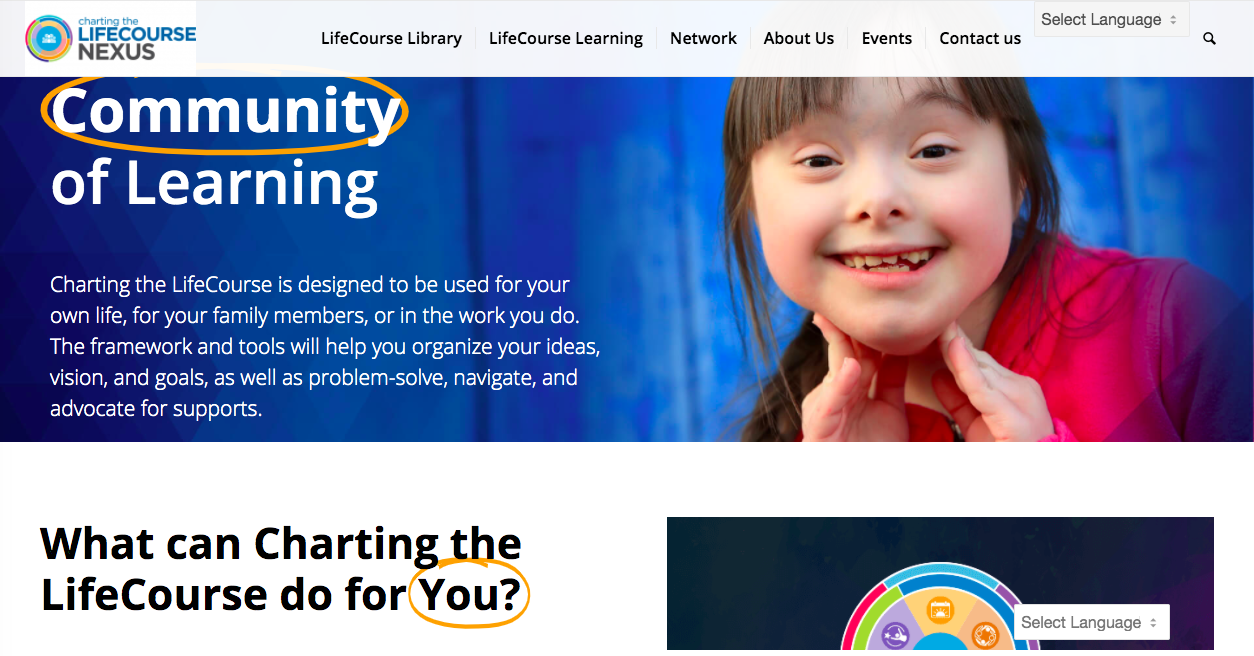
“Charting the LifeCourse is designed to be used for your own life, for your family members, or in the work you do. The framework and tools will help you organize your ideas, vision, and goals, as well as problem-solve, navigate, and advocate for supports.”
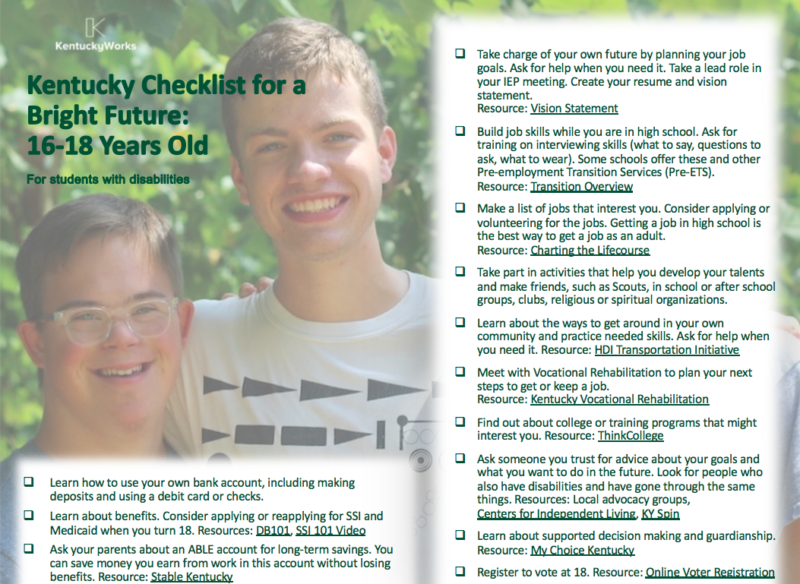
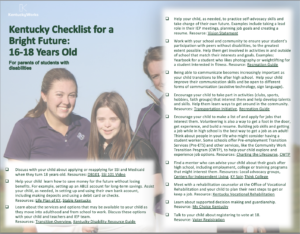
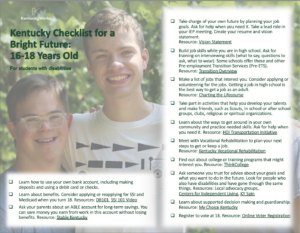
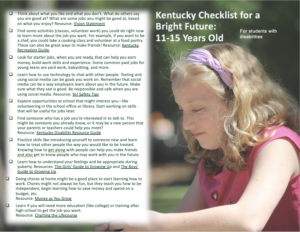
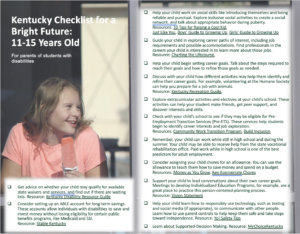
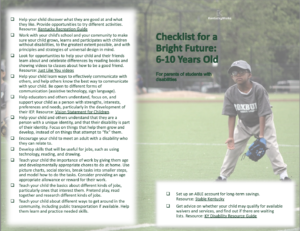
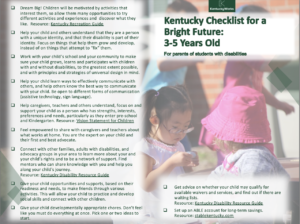
The Kentucky Checklists for a Bright Future offer a one page checklist of the most important things parents and youth can do to prepare for meaningful employment and financial security at each age. The checklists also include the most important resources you need along the way.
Learn from the Kentucky Department of Education (KDE) and the Kentucky Office of Vocational Rehabilitation (OVR) about important resources that can help your student achieve their goals of employment and post-secondary education.
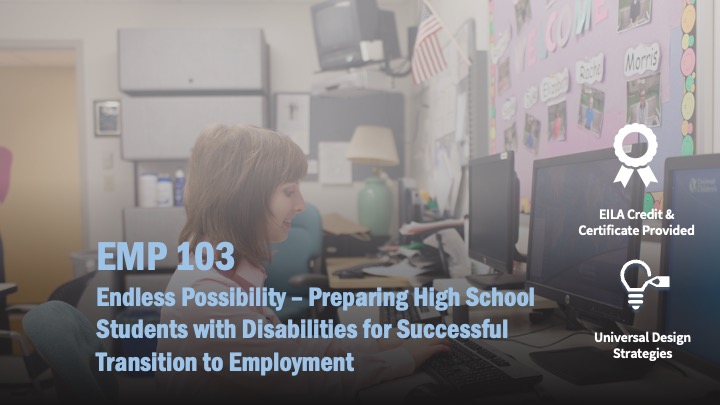
This course reviews preparation for a student as they prepare to transition from high school into employment. In addition, how support organizations fit into the broader picture of transition, and how Kentucky has used opportunities like the Workforce Innovations Opportunities Act (WIOA) to broaden our supports to youth with disabilities.
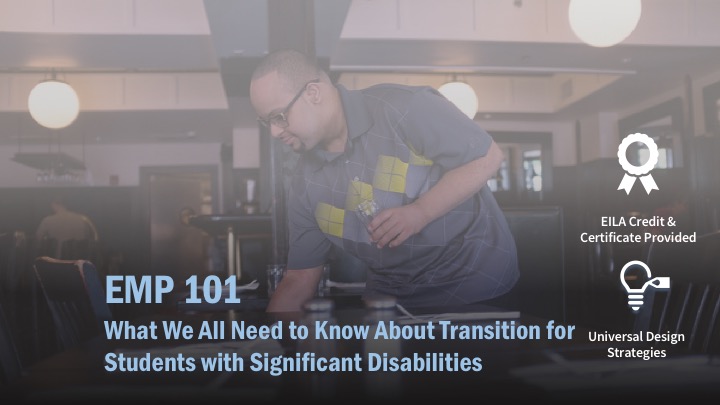
EMP 101 is an overview of the current status of employment outcomes for youths with intellectual and developmental disabilities in KY, the key steps in the transition process itself, the legal requirements and the roles of each agency, types of employment (competitive, supported, and customized), and the development of measurable post-secondary goals for transition-age youth. The module has a series of guiding questions, which form the basic structure of the module, with interactive questions interspersed throughout. We are now able to offer professional development/continuing education credits for individuals who successfully complete the training.
Transition is the “exit” out of a child’s secondary school to the adult world. The Individuals with Disabilities Education Act (IDEA) requires that children with disabilities have access to a free appropriate public education (FAPE) that prepares them for further education, employment, and independent living. One strategy for ensuring a successful transition, is planning. As part of IDEA, schools are required to provide transition planning to help the student identify interests, strengths, preferences and needs. Transition planning also means identifying possible post-school activities, including postsecondary education, vocational education, integrated employment, continuing and adult education, adult services, independent living, and/or community participation. Transition is also developing a coordinated set of activities for a student that will help him or her to achieve those goals.
Booklet about how to become an adult in many different areas of life.
KentuckyWorks is a collaborative effort between the Human Development Institute, the Kentucky Office of Vocational Rehabilitation (OVR), the Kentucky Department of Education , the Kentucky Division of Developmental and Intellectual Disabilities, KY Department for Aging and Independent Living (DAIL), Kentucky Protection & Advocacy, KY Community and Technical College System, the Kentucky Governor’s Office of Early Childhood (GOEC), Commonwealth Council on Developmental Disabilities, the Kentucky Office of Autism, and the Kentucky Autism Training Center.