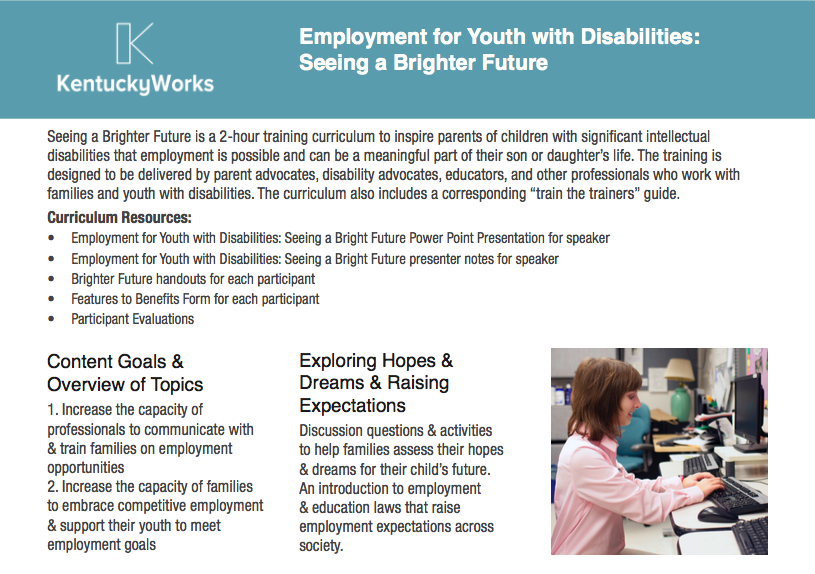
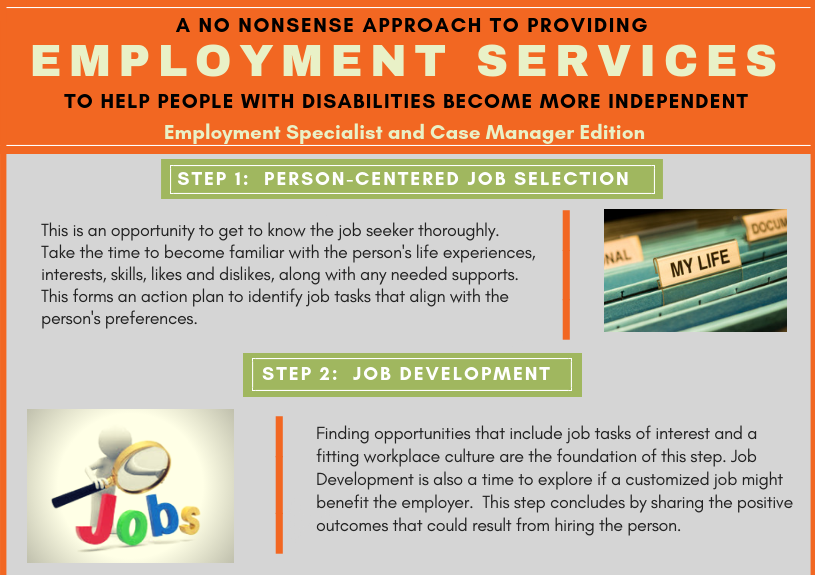
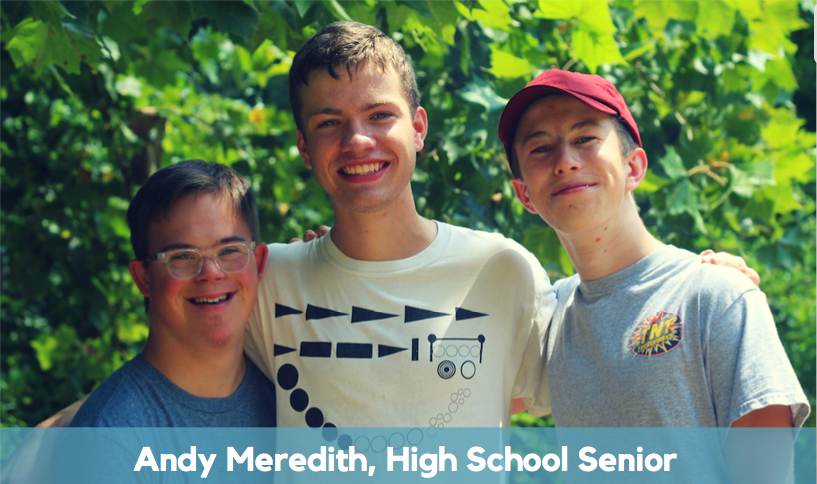
Seeing a Brighter Future title and photo of young woman with a disability at a computer, a man with Down syndrome cleaning off a table, and a young child with Down syndrome

Seeing a Brighter Future Handout with Resources for Parents

Download Seeing a Brighter Future Handout with Employment Resources [PDF] (Kentucky Version)

Download Seeing a Brighter Future Handout with Employment Resources [PDF) (National Version)

Download Seeing a Brighter Future Handout with Employment Resources [Word]

Handout to go along with the Seeing a Brighter Future curriculum to give parents the vision of employment for students with significant intellectual disabilities and practical steps to take throughout the school years to prepare for the world of work. This handout includes activities and a resource list for families and individuals.

Development of this curriculum was supported by a U.S. Administration on Community Living grant, (90DNEM0004-01-00) for the KentuckyWorks project. 

Image of KentuckyWorks Family Engagement Flyer. Text is in the Post.

Brighter Futures Family Engagement Curriculum

Contact Stephanie Meredith at Stephanie.meredith@uky.edu to learn more about our Brighter Futures family engagement curriculum.

Seeing a Brighter Future is a 2-hour training curriculum to inspire parents of children with signi cant intellectual disabilities that employment is possible and can be a meaningful part of their son or daughter’s life. The training is designed to be delivered by parent advocates, disability advocates, educators, and other professionals who work with families and youth with disabilities. The curriculum also includes a corresponding “train the trainers” guide.

Curriculum Resources:

  • Employment for Youth with Disabilities: Seeing a Bright Future Power Point Presentation for speaker
  • Employment for Youth with Disabilities: Seeing a Bright Future presenter notes for speaker
  • Brighter Future handouts for each participant
  • Features to Benefits Form for each participant
  • Participant Evaluations

In addition, you can put together a youth employment panel to share real stories of employment for youth with disabilities in Kentucky. Depending on the audience, youth panels can include students and job seekers in varied stages of the process of securing customized, integrated employment. For those who are interested in hosting a youth panel of students/young adults with disabilities to share their employment stories, the following organizations can help connect you with youth who are currently working and who are interested in sharing their stories:Build Inclusion: Contact Annette Jett at annette@buildinclusion.org
Down Syndrome Association of Central Kentucky WeWork program: Contact Traci Brewer at traci.dsack@gmail.com or 859-806-8196

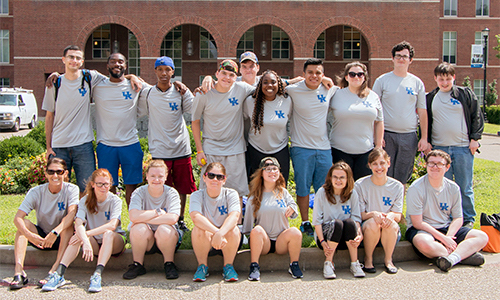
Students with disabilities at college

Post Secondary Community Conversation—All Sites Evaluation Report

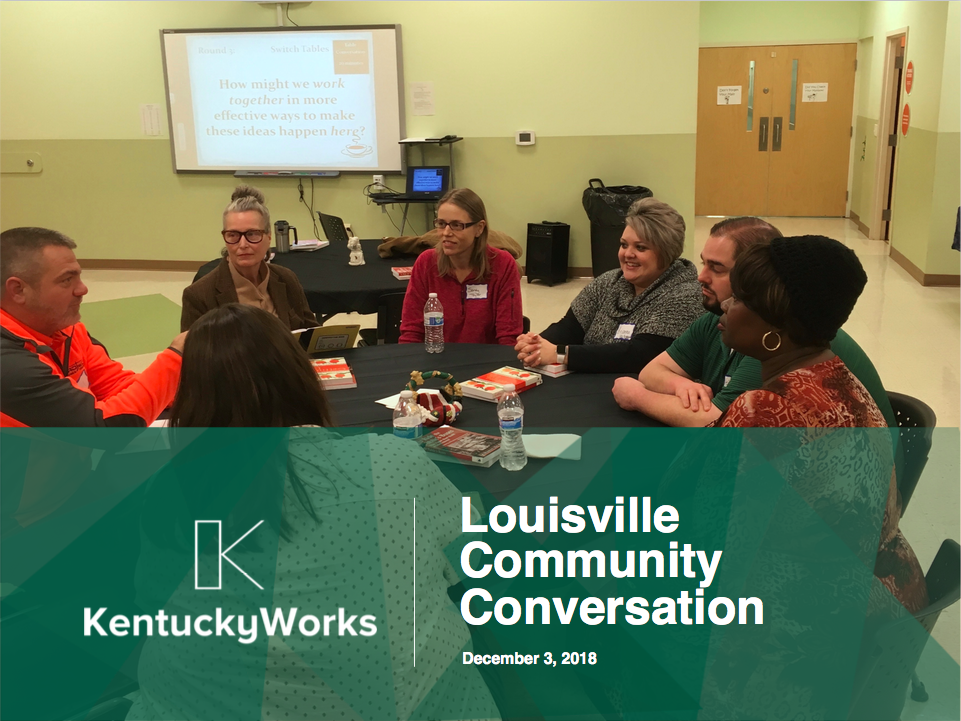
KentuckyWorks, a project funded by the Administration for Community Living, and the capacity building project, Strengthening the Postsecondary Landscape in Kentucky, funded by Think College, held a statewide community conversation on May 21, 2018. Community conversations are way to identify key issues and connections within the community as well as enable the community to set realistic and attainable goals. The statewide community conversation was held simultaneously in Lexington, Murray, and Morehead, Kentucky via video conference. The conversation was held for self-advocates, families, and professionals to discuss strategies for increasing meaningful post-secondary opportunities for youth and young adults with intellectual disabilities (ID). In round table discussions, participants worked together to come up with ideas to address the issue and to consider how participants might work together to make those ideas happen. The event included a harvesting of best ideas and identification of next steps to improve post-secondary outcomes for students with ID. Participants were given a survey after the event to provide feedback on the community conversation process. This report highlights themes from the round table discussions and the survey findings. The report has four main sections—participant description, feedback on event, harvested best ideas, and specific strategies by region.

View full report. Contact us to get copies of the individual reports for each region.
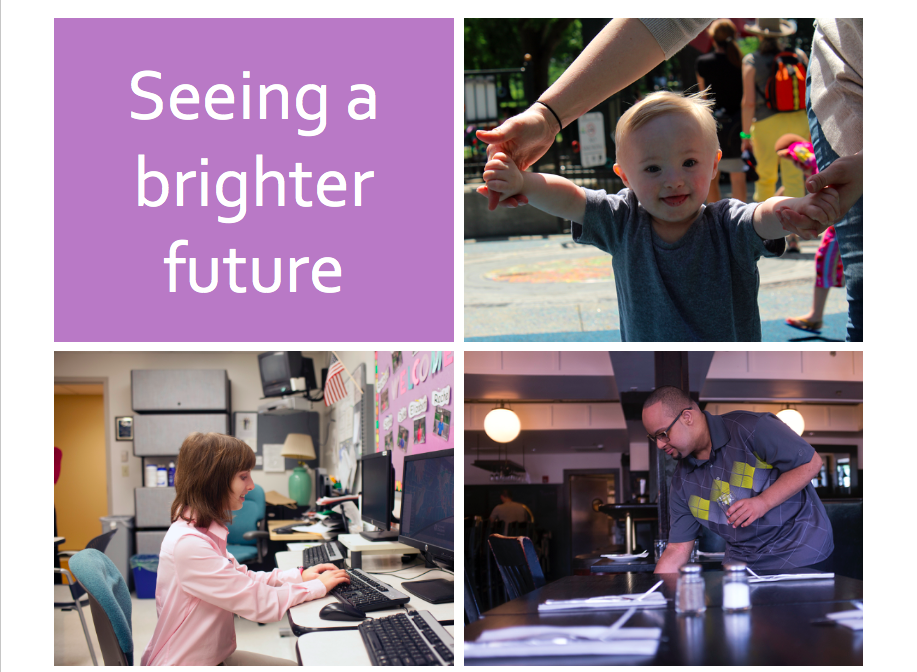
Image of vision statement of young man with Down syndrome.

Brighter Futures Vision Statement: Template and Tutorial Video

If you are getting ready for a school meeting or a meeting with your transition coordinator, you can use a paper like this to share your ideas about the future. You can talk about your goals and dreams, your strengths, your challenges, what works for you, and what doesn’t work for you. Thanks to Tiffany Stafford for sharing this idea with us for younger students! She gives instructions on how to make your own vision statement here.

Brighter Futures Vision Statement Tutorial Video

Educators and parents can also watch a video about how to prepare a vision statement with a student below: